
New Jersey homeowners face some of the most demanding climate conditions in the United States, with summer humidity and winter cold swings that place immense stress on home envelopes. According to the U.S. Department of Energy, proper insulation and weatherization can reduce heating and cooling costs by an average of 15% of total energy bills. This statistic highlights why upgrading to energy-efficient siding is not merely an aesthetic choice but a critical financial strategy for property preservation in the Tri-State area. When you invest in high-performance exterior cladding, you are effectively installing a continuous thermal barrier that protects your interior comfort while lowering your monthly utility overhead. (Customer Reviews for Home)
Why New Jersey Homes Need High-Performance Siding
The geographic diversity of New Jersey means that homes in Bergen County, Essex County, and Union County experience distinct microclimates. However, the common denominator is the need for robust weatherization. Older homes in towns like Montclair or Union often suffer from air leakage through deteriorating exterior walls. Energy-efficient siding addresses this by providing a sealed barrier that prevents conditioned air from escaping and outdoor elements from infiltrating.
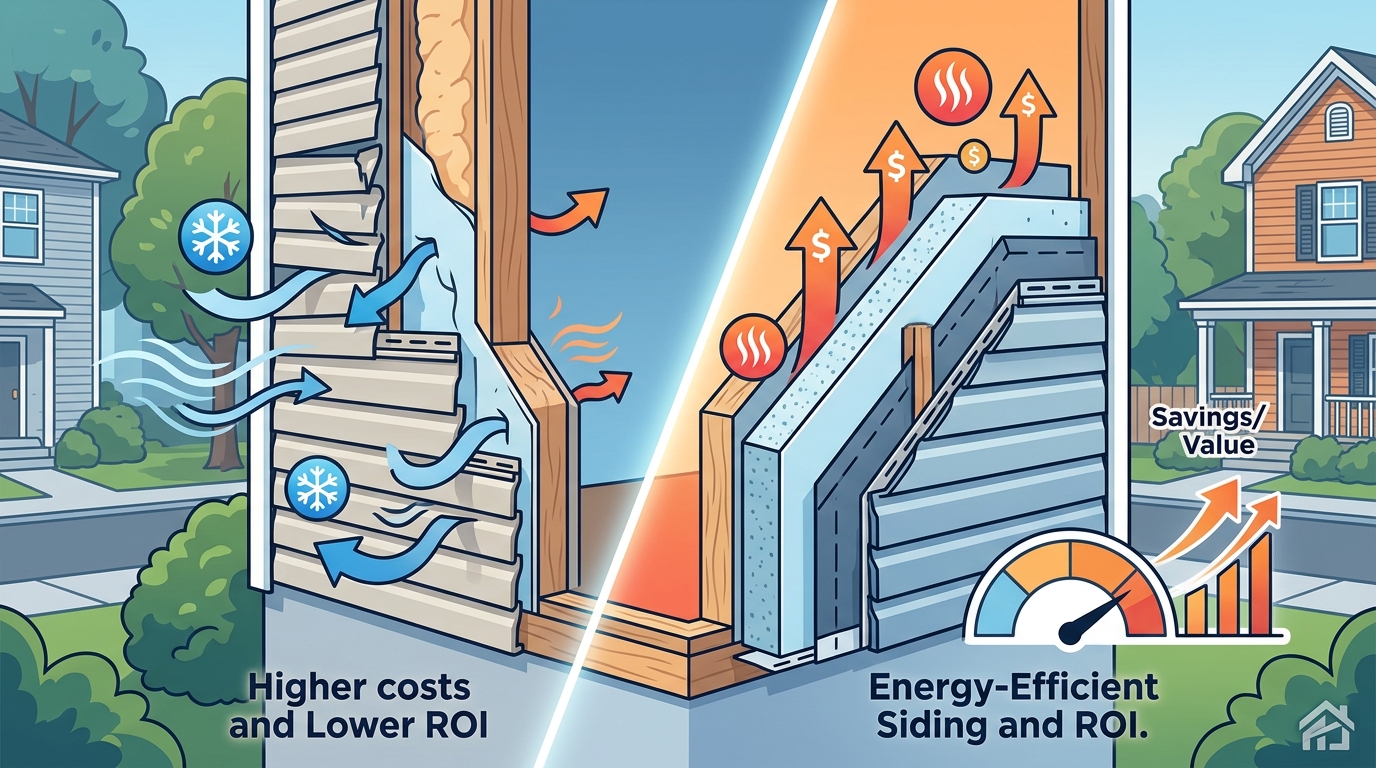
Insulated siding has emerged as the premier solution for this challenge. Insulated siding is a composite cladding system that includes a rigid foam backing layer attached to the vinyl or fiber cement panel. This foam layer acts as a thermal break, significantly reducing heat transfer through the walls. For homeowners looking to modernize their property, this technology offers a dual benefit of improved curb appeal and measurable energy savings. The structural integrity of these systems also helps protect your home from the heavy storms and high winds common in the region.
Furthermore, the impact on indoor air quality cannot be overstated. By sealing gaps and cracks, energy-efficient siding reduces the infiltration of pollen, dust, and moisture. This creates a healthier living environment for your family while simultaneously reducing the workload on your HVAC system. When your heating and cooling units run less frequently, they last longer and require fewer repairs, adding another layer of financial value to your investment.
Comparing Energy-Efficient Materials
Not all siding materials offer the same level of thermal performance. Understanding the differences between vinyl, fiber cement, and engineered wood is essential for making an informed decision. Each material has unique properties that affect its R-value, durability, and long-term maintenance requirements.
| Material Type | Thermal Performance | Durability in NJ Climate | Estimated Lifespan |
|---|---|---|---|
| Insulated Vinyl | High (with foam backing) | Excellent resistance to moisture and rot | 20-40 years |
| Fiber Cement | Medium (requires separate insulation) | Superior fire and impact resistance | 50+ years |
| Engineered Wood | Low to Medium | Good, but requires regular sealing | 15-30 years |
| Brick Veneer | Low (thermal mass only) | Extremely high structural integrity | 100+ years |
Insulated Vinyl Siding
Insulated vinyl siding has become the most popular choice for New Jersey homeowners seeking a balance of cost and efficiency. The foam backing not only improves the R-value but also provides a cushioning effect that makes the siding more resistant to dents from hail or debris. This durability is particularly valuable in areas prone to severe weather events. The material is also low maintenance, requiring only occasional washing to maintain its appearance and reflective properties.
Fiber Cement Options
Fiber cement siding offers a different set of advantages, primarily regarding fire resistance and aesthetic versatility. While it does not inherently include insulation, it can be installed over a continuous layer of rigid foam board to achieve high energy efficiency. This material is ideal for homeowners who want the look of wood without the associated maintenance headaches. It is also highly resistant to pests, which is a significant concern in the wooded regions of northern New Jersey.
Understanding Installation Costs
The cost of energy-efficient siding varies based on the material chosen, the square footage of your home, and the complexity of the installation. In New Jersey, labor costs can be higher than the national average due to the high demand for skilled craftsmen and strict local building codes. However, the upfront investment is often offset by long-term savings and increased property value.
For a typical single-family home in Essex or Union County, the cost to install insulated vinyl siding can range significantly depending on the thickness of the foam backing and the quality of the vinyl. Professional installation is critical to ensuring the warranty remains valid and the thermal performance is maximized. DIY attempts often result in improper sealing, which can negate the energy benefits and lead to moisture damage within the wall cavities.
When evaluating quotes, look for detailed breakdowns that include the removal of old siding, the installation of weather-resistant barriers, and the specific R-value of the insulation used. American Home Remodeling provides transparent estimates that account for these variables, ensuring you know exactly where your money is going. We also offer expert siding installation services tailored to the specific needs of your home.
Calculating Your Return on Investment
Return on investment (ROI) for siding is calculated by comparing the total cost of the project against the annual savings on energy bills and the increase in home resale value. While energy savings are a direct benefit, the boost in property value is often the most substantial financial return. According to the National Association of Realtors, exterior remodeling projects consistently rank among the top renovations for recouping costs at resale.
In the New Jersey market, homes with updated, energy-efficient exteriors sell faster and at higher prices than those with outdated cladding. Buyers are increasingly aware of the long-term costs of poor insulation and are willing to pay a premium for homes that have already addressed these issues. This is particularly true in competitive markets like Bergen County, where curb appeal and modern amenities are key selling points.
Additionally, energy-efficient siding can qualify you for certain green home certifications or incentives. While federal tax credits for siding are limited, local utility companies in New Jersey often offer rebates for energy-efficient upgrades. These programs can help offset the initial cost, making the ROI timeline even shorter. For more information on our roofing and siding packages, contact our team directly.
Financing and Incentives
Understanding your financing options is a crucial step in the remodeling process. American Home Remodeling offers flexible financing plans designed to make high-quality home improvements accessible to every homeowner. We provide 100% financing for qualified customers, with options for 0% interest for up to 18 months.
This financing structure allows you to upgrade your home's energy efficiency without straining your current cash flow. By spreading the cost over time, you can begin saving on energy bills almost immediately, often covering the monthly payment with a portion of those savings. This approach turns a large capital expense into a manageable operational cost with immediate positive cash flow potential.
We also work with homeowners to identify local grants or rebates available through New Jersey's energy efficiency programs. Staying informed about these incentives can further reduce the net cost of your project. Our team can guide you through the application process, ensuring you maximize every available benefit. For details on our Essex County siding services, please reach out to our office.
Key Takeaways
- Energy Savings: Proper siding and insulation can reduce heating and cooling costs by up to 15%.
- Material Choice: Insulated vinyl siding offers the best balance of cost, durability, and thermal performance for NJ homes.
- ROI Potential: Exterior upgrades consistently rank high in resale value recovery, often exceeding 70% of the project cost.
- Climate Resilience: High-performance siding protects against NJ's humidity, cold, and storm damage.
- Financing: 0% financing for up to 18 months is available for qualified customers.
- Professional Installation: Expert installation is required to maintain warranties and ensure thermal integrity.
- Local Expertise: American Home Remodeling has over 40 years of experience serving NJ homeowners.
Frequently Asked Questions
How long does insulated siding last in New Jersey?
High-quality insulated vinyl siding can last between 20 and 40 years, depending on the thickness of the material and the quality of the initial installation. The foam backing helps protect the vinyl from temperature-related expansion and contraction, extending its lifespan compared to traditional siding.
Does energy-efficient siding increase home value?
Yes, energy-efficient siding significantly increases home value by improving curb appeal and reducing the perceived maintenance burden for future buyers. Homes with modern, insulated exteriors often sell faster in competitive markets like Bergen and Essex County.
Can I install insulated siding over my existing siding?
In many cases, yes. Insulated siding is designed to be installed over existing solid surfaces, which can save on demolition costs and reduce waste. However, the underlying surface must be structurally sound and free of moisture damage to ensure proper adhesion and performance.
What is the R-value of insulated siding?
The R-value measures thermal resistance. Insulated siding typically has an R-value between 3 and 5, depending on the thickness of the foam backing. While this is not a replacement for wall insulation, it provides a significant additional layer of thermal protection.
Are there financing options available?
American Home Remodeling offers 100% financing for qualified customers, including 0% interest for up to 18 months. This allows homeowners to upgrade their homes with minimal upfront financial impact.
How do I know if my home needs new siding?
Signs include warping, cracking, fading, or high energy bills. If your siding feels cold to the touch in winter or shows signs of moisture intrusion, it is likely time for an upgrade. Our team provides free consultations to assess your home's condition.
Does siding help with noise reduction?
Yes, the foam backing in insulated siding acts as a sound dampener, reducing noise from rain, hail, and street traffic. This creates a quieter, more peaceful interior environment.
Schedule Your Consultation
Ready to transform your home with energy-efficient siding? American Home Remodeling is here to help you every step of the way. With over 40 years of experience and a commitment to service beyond expectations, we are the trusted choice for New Jersey homeowners. Contact us today to schedule your free consultation and discover how we can enhance your home's value and comfort. Visit our Contact Us page to get started.