
Step-by-Step Guide to Installing Energy-Efficient Siding in Your New Jersey Home
Homeowners in New Jersey face unique weather challenges that directly impact energy consumption and utility costs. According to the U.S. Department of Energy, proper insulation and weatherization can reduce heating and cooling costs by an average of 15 percent of total energy use. This statistic highlights why upgrading your home's exterior envelope is not merely an aesthetic choice but a critical financial investment. Energy-efficient siding acts as a primary barrier against the harsh winters and humid summers typical of the Tri-State area, ensuring your HVAC system operates at peak efficiency. (Customer Reviews for Home)
Step 1: Assessing Your Current Siding and Insulation
Before breaking ground on a new project, you must understand the current state of your home's exterior. Many older homes in Essex, Union, and Bergen counties have siding that has degraded over decades, leaving the underlying structure vulnerable to moisture intrusion and air leaks. Thermal bridging occurs when heat flows through the studs and framing, bypassing the insulation entirely. This phenomenon significantly reduces the R-value of your walls.
Begin by inspecting your existing siding for cracks, warping, or loose panels. If you find significant damage, the underlying sheathing may also be compromised. American Home Remodeling recommends a thorough inspection to determine if you need a full tear-off or if you can install new siding over existing layers. However, for maximum energy efficiency, removing old siding allows for a complete assessment of the structural integrity and the installation of a continuous insulation layer.
Step 2: Choosing the Right Energy-Efficient Materials
Selecting the correct siding material is the most critical decision in the process. Not all siding provides equal thermal performance. The goal is to choose materials that offer high durability and superior insulating properties.
Insulated Vinyl Siding
Insulated vinyl siding features a rigid foam backing attached to the back of the vinyl panel. This foam layer creates a thermal break that reduces heat transfer. It also helps to dampen sound, making it an excellent choice for urban areas in New Jersey. The foam backing can increase the R-value of the wall assembly by up to R-3 or higher, depending on the thickness of the foam.
Fiber Cement Siding
Fiber cement is known for its durability and resistance to rot, insects, and fire. While it does not have built-in insulation, it is often installed with a separate weather-resistant barrier and insulation layer. Its density provides excellent thermal mass, which helps regulate indoor temperatures by absorbing heat during the day and releasing it slowly at night.
Engineered Wood Siding
Engineered wood offers a natural aesthetic with improved stability compared to traditional wood. It is typically installed with a house wrap and insulation. While it requires more maintenance than vinyl or fiber cement, it can be finished with high-performance paints that reflect solar radiation, reducing cooling loads in the summer.
Step 3: Preparing the Substrate and Weather Barrier
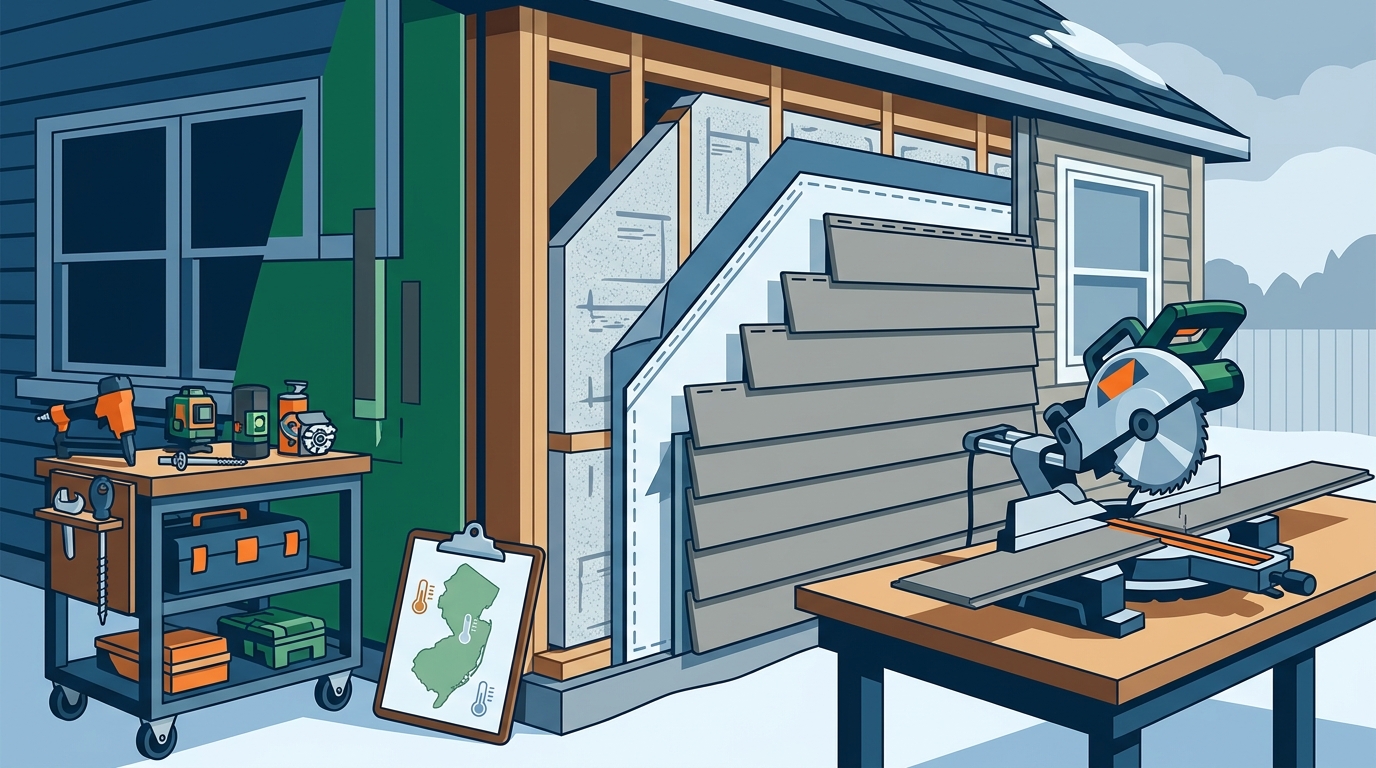
Proper preparation is the foundation of an energy-efficient installation. Once the old siding is removed, you must address the underlying structure. This step involves installing a high-quality weather-resistant barrier (WRB) over the sheathing.
House wrap is a synthetic material that allows water vapor to escape while blocking liquid water and air infiltration. It acts as the primary air barrier for your home. In New Jersey, where humidity levels can fluctuate dramatically, choosing a WRB that manages moisture effectively is crucial to preventing mold and rot. Ensure that all seams in the house wrap are taped according to manufacturer specifications to maintain an unbroken air barrier.
Next, install rigid foam insulation boards over the sheathing if you are pursuing a high-performance envelope. This continuous insulation layer eliminates thermal bridges at the studs. Secure the foam boards with appropriate fasteners and seal all joints with tape or sealant to prevent air leakage. This step is often overlooked but is essential for achieving the highest energy efficiency ratings.
Step 4: The Installation Process and Sealing
With the substrate prepared, you can begin installing the new siding. The process requires precision to ensure a tight seal and a professional finish.
Starting with the Starter Strip
Begin by installing a starter strip at the bottom of the wall. This strip provides a level base for the first row of siding and ensures that the bottom edge is properly aligned. Use a level to check the horizontal alignment frequently. Even a slight deviation can compound over the length of the wall, leading to significant misalignment.
Installing the Panels
Install the siding panels from the bottom up, overlapping each row according to the manufacturer's instructions. For insulated siding, ensure that the foam backing is flush against the insulation layer below. Leave a small gap between panels to allow for expansion and contraction due to temperature changes. New Jersey experiences wide temperature swings, so proper spacing is vital to prevent buckling.
Sealing Around Openings
Carefully cut and fit siding around windows, doors, and corners. Use flashing tape or sealant around all openings to prevent water infiltration. This is a critical step for energy efficiency, as air leaks around windows and doors can account for a significant portion of heat loss. Ensure that the flashing directs water away from the structure and into the drainage plane.
Step 5: Finishing Touches and Trim Work
The final step involves installing trim pieces, such as corner posts, J-channels, and cap boards. Trim not only provides a finished look but also seals the edges of the siding. Use high-quality caulk at all joints and seams to create an airtight seal. Pay special attention to the intersection of the siding and the roof line, as well as the foundation.
Inspect the entire installation for any gaps or misalignments. Clean the siding according to the manufacturer's recommendations to remove any debris or adhesive residue. A clean, well-installed siding system will not only enhance the curb appeal of your home but also provide long-term energy savings.
Key Takeaways for NJ Homeowners
- Energy Savings: Proper siding installation can reduce heating and cooling costs by up to 15 percent, according to the U.S. Department of Energy.
- Material Choice: Insulated vinyl siding offers built-in thermal resistance, while fiber cement provides durability and thermal mass.
- Weather Barrier: A continuous weather-resistant barrier is essential for managing moisture and air infiltration in New Jersey's climate.
- Professional Installation: American Home Remodeling has served over 20,000 customers, ensuring expert execution of complex installations.
- Longevity: High-quality siding materials can last 20 to 50 years, providing a long-term return on investment.
- Comfort: Energy-efficient siding reduces drafts and hot spots, creating a more consistent indoor environment.
- Property Value: New siding is one of the top home improvement projects for increasing resale value in the Tri-State area.
Frequently Asked Questions
How long does siding installation take in New Jersey?
The timeline depends on the size of the home and the complexity of the project. A typical single-family home siding installation can take one to two weeks, including preparation and cleanup.
Can I install new siding over my existing siding?
While it is possible to install siding over existing layers, it is generally recommended to remove old siding to inspect the sheathing and install proper insulation. This ensures the best energy efficiency and prevents moisture traps.
What is the best siding for energy efficiency?
Insulated vinyl siding is often considered the best option for energy efficiency due to its built-in foam backing. However, fiber cement combined with external insulation is also a highly effective choice for durability and thermal performance.
Does siding installation require a permit in New Jersey?
Permit requirements vary by municipality in New Jersey. It is advisable to check with your local building department. American Home Remodeling can assist with navigating local regulations and ensuring compliance.
How does siding affect my home's insulation?
Siding itself provides minimal insulation, but when installed with a weather barrier and additional insulation layers, it creates a comprehensive thermal envelope that significantly reduces heat transfer.
What maintenance does energy-efficient siding require?
Insulated vinyl siding requires minimal maintenance, primarily consisting of occasional washing with soap and water. Fiber cement may require repainting every 10 to 15 years. Engineered wood requires more frequent maintenance to protect against moisture.
Is financing available for siding projects?
Yes, financing options are often available for qualified customers. American Home Remodeling offers 100 percent financing for qualified customers, with 0 percent interest for up to 18 months, making it easier to invest in home improvements.
Schedule Your Consultation
Transforming your home with energy-efficient siding is a strategic investment in comfort, value, and sustainability. American Home Remodeling brings over 40 years of expertise to every project, ensuring your home is protected against New Jersey's elements. Contact us today to schedule a consultation and discover how our team can enhance your living space.
Contact American Home Remodeling to get started on your siding project.