
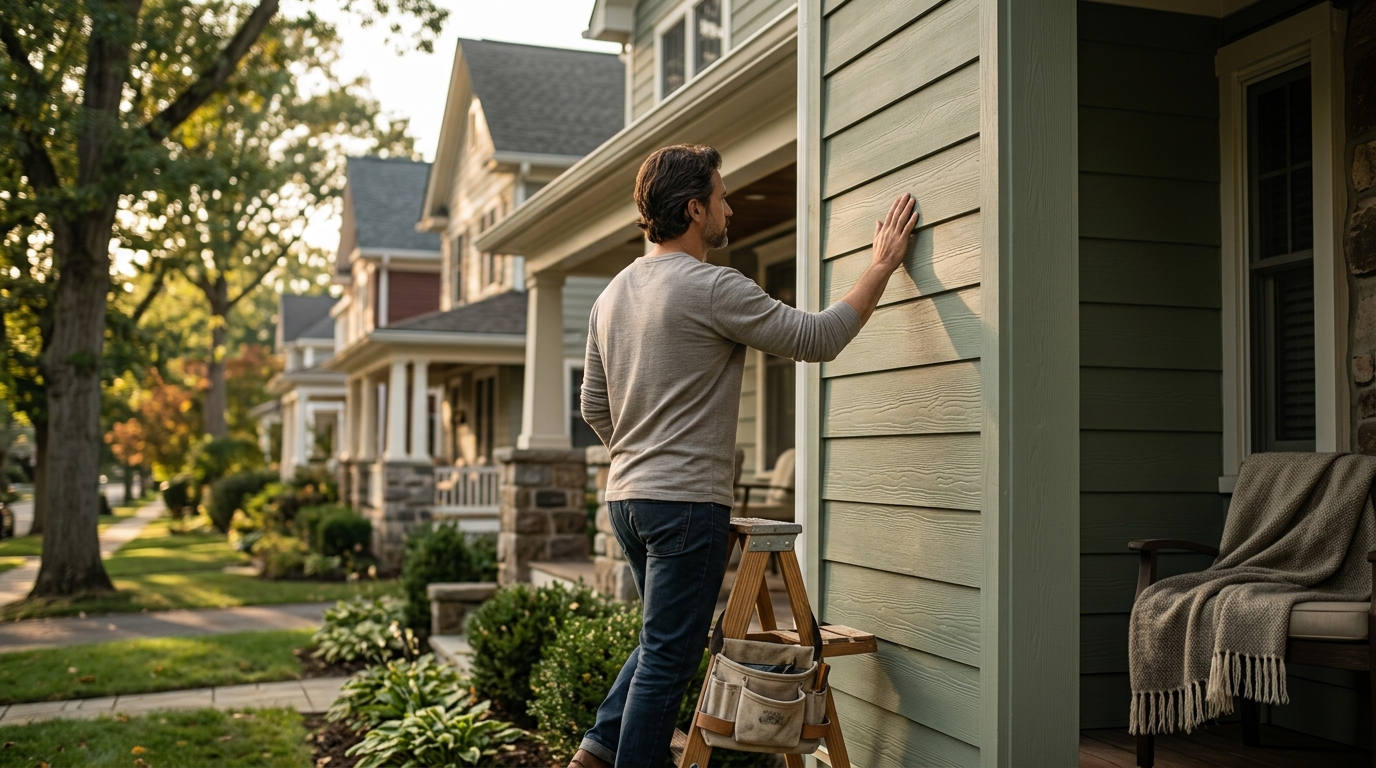
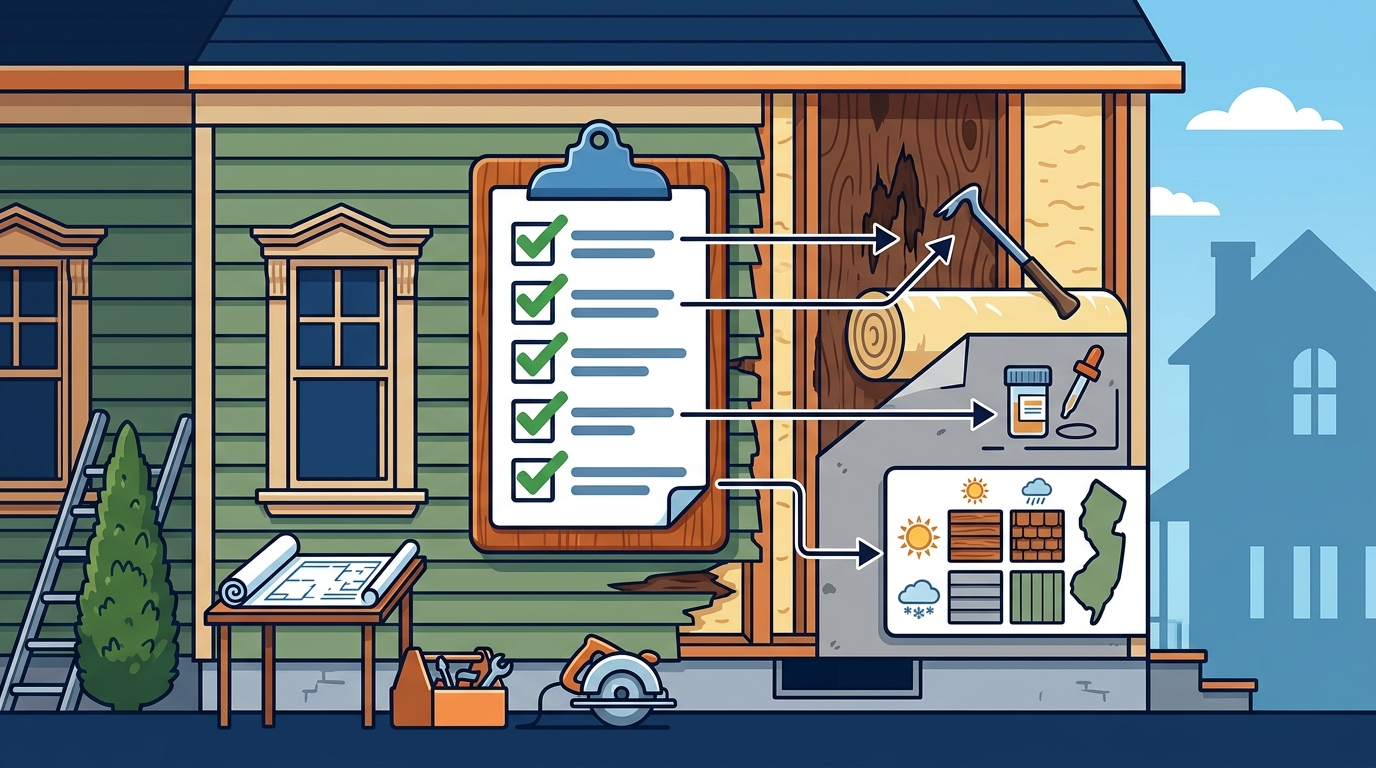
Before replacing old house siding, you must inspect the underlying sheathing for rot, verify insulation levels, test for lead or asbestos, and select a material suited to your climate. This guide covers these four critical checkpoints to ensure a safe, durable, and energy-efficient installation. American Home Remodeling provides this framework to help New Jersey homeowners avoid costly surprises during exterior renovations.
Underlying Structural Damage
Structural integrity is the foundation of any siding project. Siding is a weather barrier, not a structural component, but the materials behind it are critical. When removing old siding, you expose the sheathing, which is the layer of wood or fiber cement board directly attached to the studs. If this layer is compromised, the new siding will fail prematurely. For additional details, review the Customer Reviews for Home.
Identifying Rot and Decay
Checking the House Wrap
The house wrap, or weather-resistive barrier, sits between the sheathing and the siding. It prevents liquid water from entering the wall cavity while allowing moisture vapor to escape. Old house wraps can become brittle, torn, or saturated. During a full replacement, the old wrap should be removed and replaced with a new, high-quality synthetic membrane. This step is non-negotiable for long-term durability in New Jersey's variable climate. For additional details, review the Essential Tips for Successful.
Insulation Assessment
Insulation assessment is a critical step that determines the energy efficiency of your home. Many older New Jersey homes have insufficient insulation or outdated materials that no longer meet modern standards. Replacing siding is the ideal time to upgrade the thermal envelope of your home.
Evaluating Existing Insulation
Once the siding is removed, the contractor can inspect the type and depth of the existing insulation. Older homes may have loose-fill cellulose or fiberglass batts that have settled or compressed over time. This reduces their R-value, the measure of thermal resistance. If the insulation is damaged by moisture or pests, it must be removed and replaced. Properly installed insulation reduces heating and cooling costs significantly.
Upgrading for Energy Efficiency
Hazardous Materials Testing
Hazardous materials testing is a mandatory safety step for homes built before 1978. Many older homes contain lead-based paint or asbestos-containing materials (ACM) in their siding or underlying structures. Disturbing these materials without proper containment can release toxic fibers or dust into the air, posing serious health risks.
Lead Paint Identification
Lead paint was commonly used on exterior siding until the 1970s. It can be identified by its color, often white, gray, or blue, and its resistance to chipping. A certified lead inspector can use XRF (X-ray fluorescence) devices to test for lead without damaging the surface. If lead is present, the removal process must follow EPA regulations, including containment, wetting down surfaces, and proper disposal of debris.
Asbestos Detection
Asbestos was used in some siding materials, particularly fiber cement and vinyl, before the 1980s. It is not always visible, so laboratory testing is required for confirmation. If asbestos is detected, a licensed abatement contractor must remove it before the siding replacement can proceed. This ensures the safety of the workers and the homeowners. Skipping this step can result in legal liability and health hazards.
Siding Material Selection
Siding material selection is a decision that balances aesthetics, durability, maintenance, and cost. The right material depends on your home's architectural style, local climate, and budget. New Jersey's climate, with its cold winters and humid summers, demands materials that can withstand freeze-thaw cycles and moisture exposure.
Comparing Common Siding Materials
| Material | Durability | Maintenance | Cost | Best For |
|---|---|---|---|---|
| Vinyl | High | Low | Low | Budget-conscious homeowners |
| Fiber Cement | Very High | Medium | Medium | Long-term durability and fire resistance |
| Wood | Medium | High | High | Traditional aesthetics and eco-friendliness |
| Engineered Wood | High | Low | Medium | Wood look with lower maintenance |
Climate Considerations for New Jersey
Key Takeaways
- Always inspect the sheathing for rot and replace damaged sections before installing new siding.
- Replace the house wrap to ensure a continuous moisture barrier behind the new siding.
- Assess existing insulation and consider upgrading to higher R-value materials for energy efficiency.
- Test for lead and asbestos in homes built before 1978 to ensure safe and compliant removal.
- Choose siding materials that suit New Jersey's climate, balancing durability, maintenance, and cost.
- Work with a licensed contractor who follows local building codes and safety regulations.
Frequently Asked Questions
Do I need to replace the sheathing if it looks okay?
If the sheathing is dry, solid, and free of rot, it can often be reused. However, a professional inspection is recommended to check for hidden moisture or damage. Reusing sound sheathing can save on costs, but it must be in good condition to support the new siding.
What is the best insulation to add during siding replacement?
Rigid foam board or dense-pack cellulose are excellent choices for adding insulation during siding replacement. They provide high R-values and improve the overall thermal performance of the wall. The best option depends on your specific home and budget.
How do I know if my siding contains asbestos?
You cannot determine if siding contains asbestos by sight. A certified inspector must collect a sample and send it to a laboratory for analysis. If asbestos is present, it must be removed by a licensed abatement contractor before the siding replacement can proceed.
Is vinyl siding a good choice for New Jersey homes?
Vinyl siding is a popular choice for New Jersey homes due to its low maintenance and affordability. It is durable and resistant to rot and insects. However, it may not be as durable as fiber cement in extreme weather conditions. Consider your budget and maintenance preferences when choosing.
How long does a siding replacement project take?
A typical siding replacement project takes one to two weeks, depending on the size of the home and the complexity of the work. If structural repairs or insulation upgrades are needed, the project may take longer. A detailed timeline should be provided by your contractor before work begins.
Do I need a permit for siding replacement in New Jersey?
Yes, you typically need a permit for siding replacement in New Jersey. The permit ensures that the work meets local building codes and safety standards. Your contractor should handle the permit process for you. Always verify that the permit is obtained before work begins.
Conclusion
Replacing old house siding is a significant investment that requires careful planning and execution. By checking for structural damage, assessing insulation, testing for hazardous materials, and selecting the right material, you can ensure a safe and durable result. American Home Remodeling has over 40 years of experience serving New Jersey homeowners, and we are committed to providing high-quality craftsmanship and affordable pricing. To start your project, for a free consultation.