

Signing a remodeling contract is a major financial commitment that requires careful review of specific legal and operational clauses. American Home Remodeling emphasizes that a clear, detailed contract protects both the homeowner and the contractor by defining expectations upfront. This guide outlines the seven essential terms you must verify before signing any renovation agreement in New Jersey.
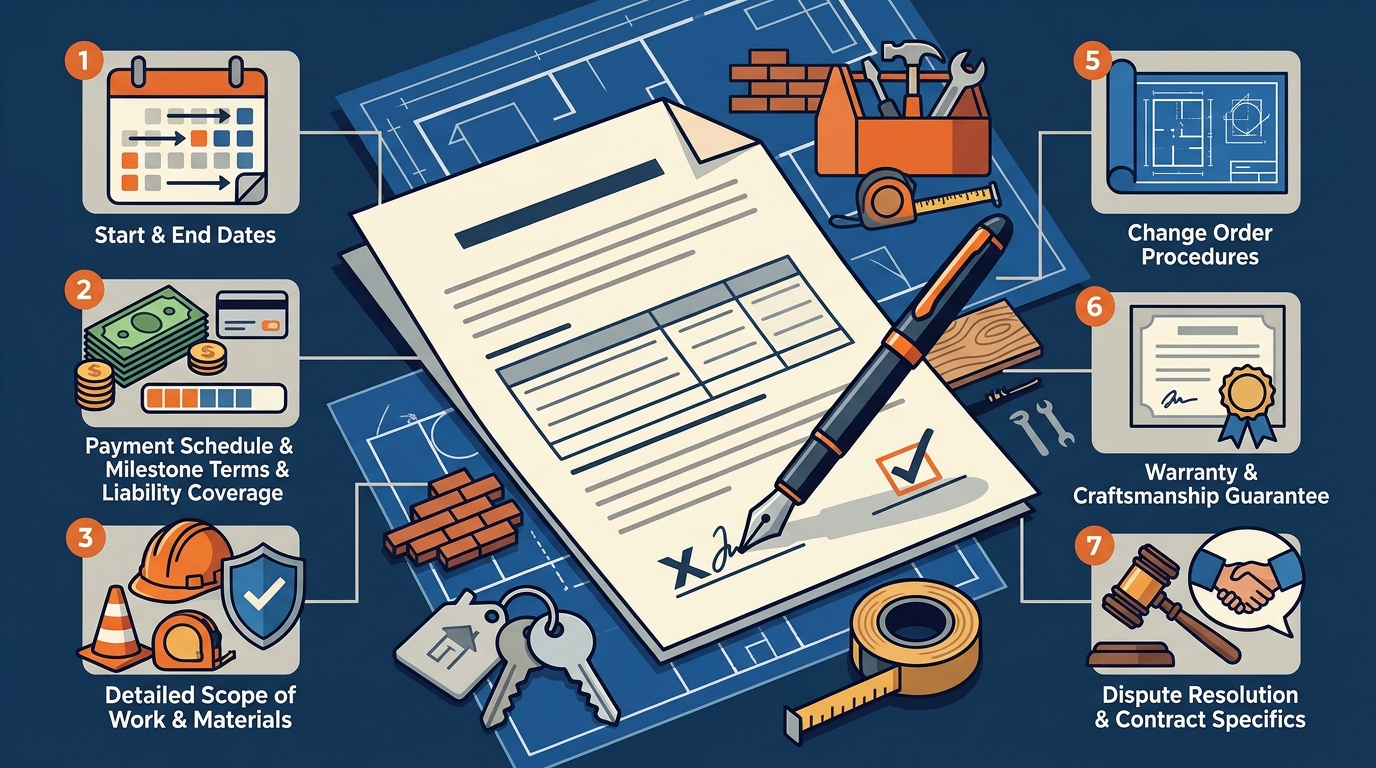
1. Detailed Scope of Work
The scope of work must explicitly list every task, material, and finish included in the project. Vague descriptions like "update the kitchen" lead to disputes over what is actually being done. Ensure the document specifies the exact brands, colors, and models of fixtures and appliances. This level of detail prevents the contractor from substituting cheaper materials without your approval. For additional details, review the Contact Us American Home.
2. Transparent Payment Schedule
Your payment schedule should be tied to completed milestones, not just calendar dates. Avoid contracts that demand large upfront deposits, as this can signal cash flow issues. A standard structure involves a smaller initial deposit followed by payments after the completion of specific phases, such as framing or drywall. This ensures you only pay for work that has been verified and finished to your satisfaction. For additional details, review the Customer Reviews for Home.
3. Realistic Project Timeline
4. Change Order Process
A defined change order process is critical for managing any modifications to the original plan. Remodeling projects often evolve, and verbal agreements about extra work are a common source of conflict. The contract should state that any changes to the scope or cost must be documented in writing and signed by both parties before work begins. This protects you from unexpected price hikes for minor adjustments.
5. Warranty and Guarantee Terms
6. Insurance and Liability Coverage
The contractor must carry adequate liability insurance and workers' compensation. This protects you from being held responsible if a worker is injured on your property or if accidental damage occurs to your home. Request a certificate of insurance before signing the contract to verify coverage limits. This is a non-negotiable safety measure for any serious renovation project.
7. Dispute Resolution Clause
The contract should outline how disagreements will be resolved, such as through mediation or arbitration. Litigation is expensive and time-consuming, so a clear dispute resolution process can save both parties significant resources. Check if the contract requires you to waive your right to a jury trial, as this is a significant legal implication. Understanding this clause ensures you know your options if the project does not go as planned.
Choosing the Right Contract
When reviewing these terms, prioritize clarity and specificity over brevity. A longer contract that details every aspect of the project is far safer than a short, vague document. If a contractor is hesitant to provide a detailed written agreement, consider looking for another professional. For homeowners in New Jersey, working with a reputable firm like American Home Remodeling ensures that these critical terms are handled with transparency and expertise.
Frequently Asked Questions
What is a change order in a remodeling contract?
A change order is a written document that modifies the original scope of work or cost of a project. It must be signed by both the homeowner and the contractor before any additional work begins.
How much should I pay as a deposit for a remodel?
Does the contractor need to be licensed in New Jersey?
Yes, contractors performing work over a certain value must be licensed by the New Jersey State Board of Contractors. You should verify their license status before signing any agreement.
What happens if the project is delayed?
Delays are often covered by the timeline clause in the contract. If the delay is due to the contractor, you may be entitled to compensation as defined in the agreement.
Who is responsible for permits?
The contract should specify who is responsible for obtaining and paying for building permits. Typically, the contractor handles the process, but the homeowner is often the one who pays the fee.
Can I fire the contractor mid-project?
Yes, but you should review the termination clause in the contract. It will outline the notice required and how you will be billed for work completed up to that point.