
Improving energy efficiency with new siding is achieved by selecting insulated materials, reducing thermal bridging, sealing air gaps, and installing proper moisture barriers. This guide explains how these four technical elements work together to lower heating and cooling costs in New Jersey homes. American Home Remodeling provides expert siding installation across the state, ensuring your exterior upgrade delivers both aesthetic appeal and measurable energy performance.
Insulated Siding Materials
Insulated siding is a composite material that combines an exterior cladding with a rigid foam backing to increase the overall R-value of the wall assembly. Unlike standard vinyl or fiber cement siding, which relies entirely on the wall cavity insulation behind it, insulated siding adds a continuous layer of thermal resistance directly to the exterior surface. This continuous layer is critical because it addresses the weak points in traditional insulation systems.
Types of Insulated Siding
Homeowners in New Jersey typically choose between two main types of insulated siding: insulated vinyl and insulated fiber cement. Insulated vinyl siding features a polyurethane or polystyrene foam backing attached to the vinyl face. This option is popular for its low maintenance and cost-effectiveness. Insulated fiber cement siding, on the other hand, pairs the durability of cement board with a foam backing, offering superior fire resistance and a premium aesthetic.
R-Value Considerations
Thermal Bridging Reduction
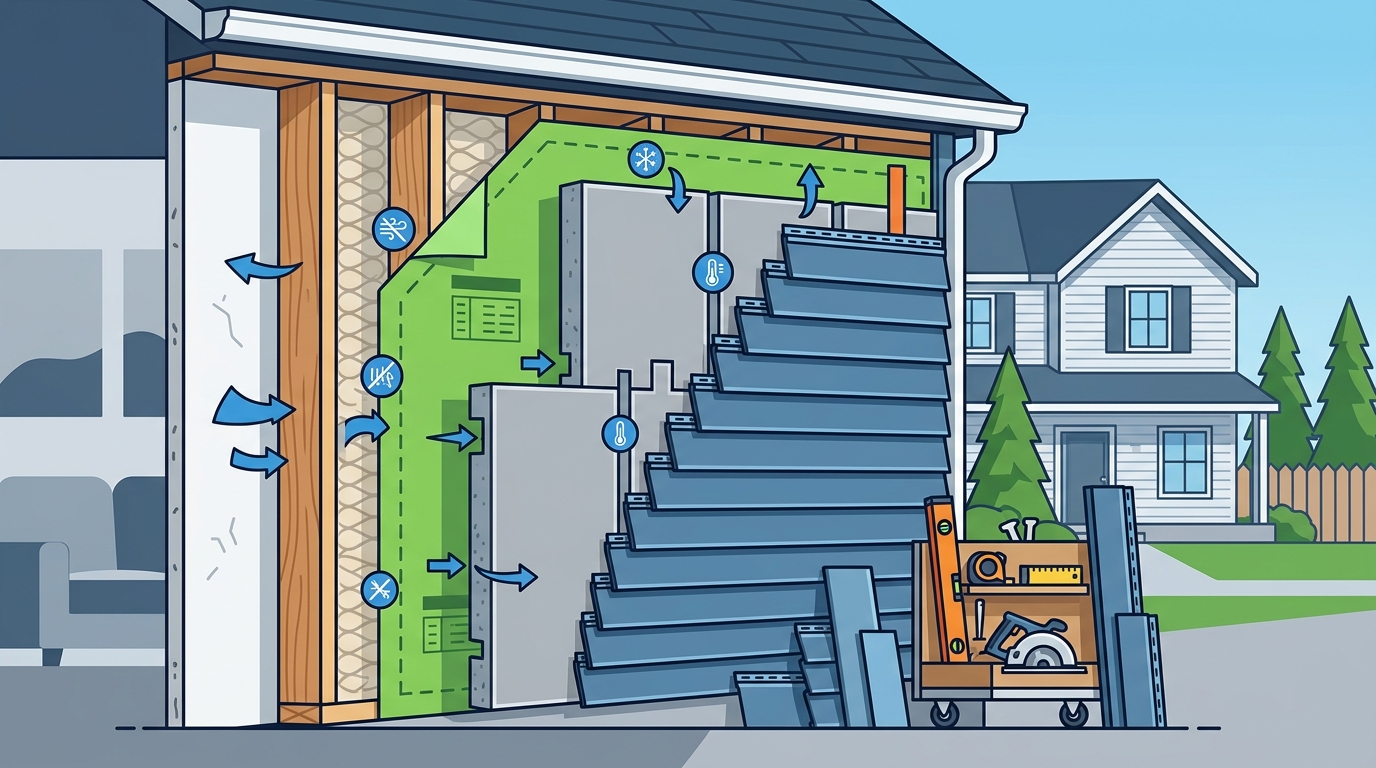
Thermal bridging is the process where heat transfers through a building component that has a higher thermal conductivity than the surrounding insulated materials. In traditional siding installations, the studs and sheathing act as thermal bridges, allowing heat to escape during winter and enter during summer. Insulated siding mitigates this issue by creating a continuous layer of insulation over the entire wall surface, including the studs.
The Role of Continuous Insulation
Continuous insulation is a layer of insulation that runs uninterrupted across the entire exterior wall assembly. By installing insulated siding, homeowners effectively add this continuous layer. This reduces the temperature difference between the interior and exterior surfaces of the wall, minimizing condensation risks and improving overall comfort. The reduction in thermal bridging is one of the most significant energy-saving benefits of upgrading to insulated siding.
Impact on Comfort
Reducing thermal bridging also improves indoor comfort by eliminating cold spots on interior walls. Homeowners often notice that rooms feel warmer in winter and cooler in summer after installing insulated siding. This uniform temperature distribution reduces the need for supplemental heating or cooling in specific areas of the home, further contributing to energy savings.
Air Sealing Gaps
Air sealing is the process of closing gaps and cracks in the building envelope to prevent uncontrolled air leakage. Even with high-quality insulation, air leakage can significantly reduce the energy efficiency of a home. Siding installation provides a unique opportunity to address air leakage at the exterior wall level. Proper air sealing during siding replacement ensures that the new siding system performs as intended.
Common Air Leakage Points
Common air leakage points include window and door perimeters, penetrations for pipes and wires, and the junction between the siding and the foundation. During a siding replacement, contractors can inspect and seal these areas. Using appropriate sealants and gaskets ensures that air cannot bypass the insulation layer. This step is crucial for maximizing the energy efficiency of the new siding system.
Benefits of Air Sealing
Effective air sealing reduces the workload on HVAC systems, leading to lower energy consumption. It also improves indoor air quality by preventing outdoor pollutants and allergens from entering the home. Additionally, air sealing helps maintain consistent indoor humidity levels, which is particularly important in New Jersey's humid summers. By combining air sealing with insulated siding, homeowners can achieve a more energy-efficient and comfortable living environment.
Moisture Barriers
A moisture barrier is a layer of material installed within the wall assembly to prevent liquid water from penetrating the interior structure. In New Jersey, where weather conditions range from heavy snow to humid summers, moisture management is critical for maintaining the integrity of the building envelope. Proper moisture barriers work in tandem with insulated siding to protect the home from water damage and mold growth.
Choosing the Right Barrier
Homeowners should choose moisture barriers that are compatible with their specific siding type and climate. House wraps and fluid-applied membranes are common options. These materials allow water vapor to escape while blocking liquid water. It is essential to install these barriers correctly, with proper overlaps and sealing at penetrations, to ensure they function as intended. A poorly installed moisture barrier can lead to trapped moisture, which can cause rot and mold.
Integration with Insulated Siding
When installing insulated siding, the moisture barrier is typically placed between the sheathing and the foam backing. This configuration ensures that any water that penetrates the siding can drain out while preventing it from reaching the structural components. The combination of a proper moisture barrier and insulated siding creates a robust defense against the elements, ensuring long-term durability and energy efficiency.
Key Takeaways
- Insulated siding adds a continuous layer of thermal resistance, reducing thermal bridging.
- Thermal bridging reduction improves comfort and lowers HVAC workload.
- Air sealing during siding installation prevents uncontrolled air leakage.
- Moisture barriers protect the wall assembly from water damage and mold.
- Proper installation is critical for maximizing the energy efficiency of new siding.
- New Jersey's climate requires a balanced approach to insulation and moisture management.
- Consulting with a professional ensures the correct selection and installation of siding materials.
- Energy-efficient siding can lead to lower utility bills and increased home value.
Frequently Asked Questions
What is the best type of insulated siding for New Jersey?
How much can insulated siding reduce energy costs?
The reduction in energy costs varies based on the existing insulation, climate, and HVAC efficiency. However, homeowners often see a noticeable decrease in heating and cooling bills after installing insulated siding.
Do I need to replace my existing insulation when installing insulated siding?
No, you do not need to replace your existing insulation. Insulated siding works in conjunction with the insulation in your wall cavities to provide a more efficient building envelope.
Is insulated siding more expensive than standard siding?
Yes, insulated siding is typically more expensive than standard siding due to the added foam backing. However, the long-term energy savings can offset the initial cost over time.
Can I install insulated siding over my existing siding?
In some cases, insulated siding can be installed over existing siding, but this depends on the condition of the underlying structure and local building codes. A professional assessment is recommended.
How does insulated siding affect indoor air quality?
By reducing air leakage, insulated siding can improve indoor air quality by preventing outdoor pollutants and allergens from entering the home. It also helps maintain consistent humidity levels.
What is the lifespan of insulated siding?
The lifespan of insulated siding depends on the material. Insulated vinyl siding can last 20 to 30 years, while insulated fiber cement siding can last 50 years or more with proper maintenance.
Conclusion
Improving energy efficiency with new siding is a strategic investment for New Jersey homeowners. By selecting insulated siding materials, reducing thermal bridging, sealing air gaps, and installing proper moisture barriers, you can create a more comfortable and energy-efficient home. American Home Remodeling offers expert siding installation services across New Jersey, ensuring that your project meets the highest standards of quality and performance. To discuss your siding project and explore energy-efficient options, today.