
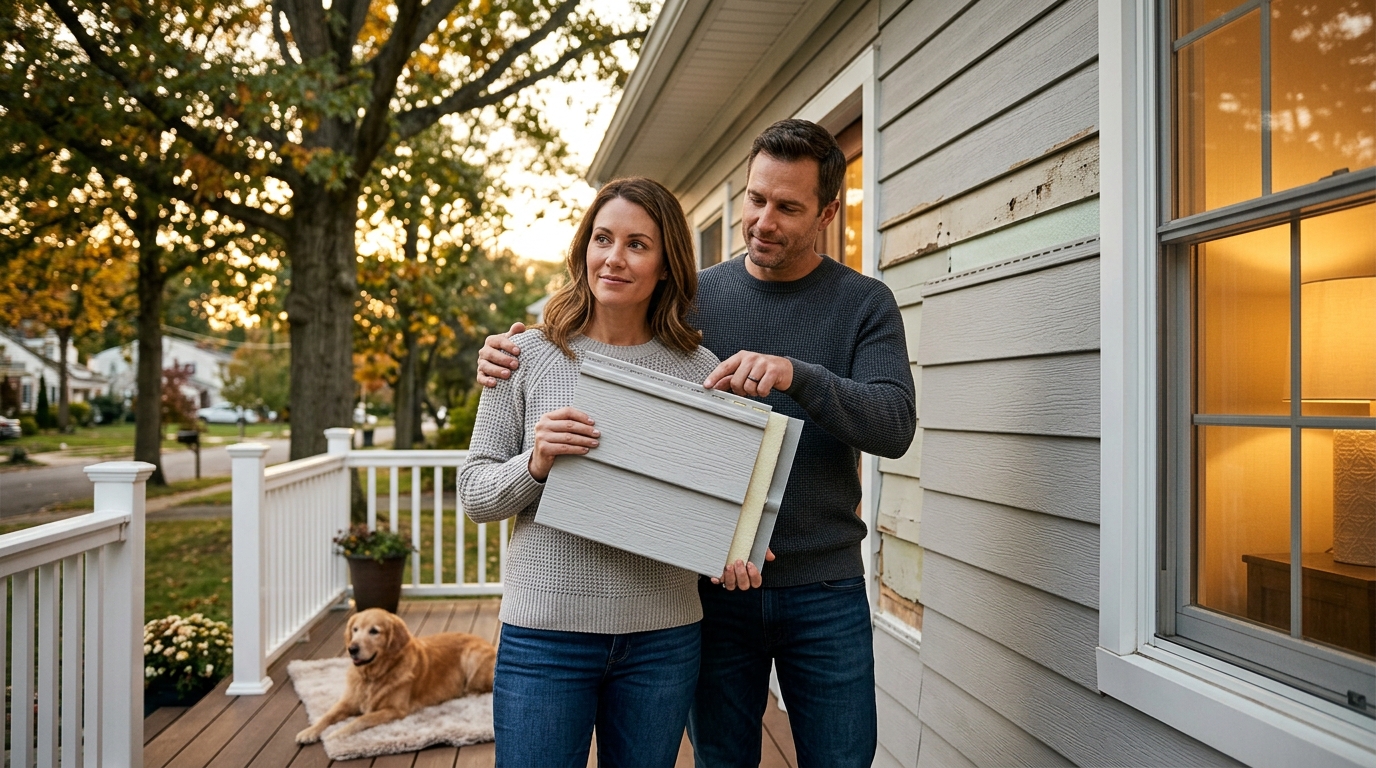
Improving energy efficiency with new siding involves selecting insulated materials, reducing thermal bridging, sealing air gaps, and installing proper moisture barriers. This guide explains how these four technical layers work together to lower heating and cooling costs in New Jersey homes. American Home Remodeling provides this framework to help homeowners make informed decisions during their next renovation project.
Insulated Siding Materials
Insulated siding is a composite building material that combines a decorative exterior face with a rigid foam backing to increase the overall R-value of the wall assembly. Standard vinyl or fiber cement siding typically offers an R-value of 0.6 to 1.0, which provides minimal thermal resistance. By adding a layer of expanded polystyrene (EPS) or extruded polystyrene (XPS) foam, the total R-value can increase to 2.0 or higher. This added insulation layer acts as a continuous thermal break, reducing the amount of heat that escapes through the wall during winter and enters during summer. For additional details, review the Customer Reviews for Home.
Types of Insulated Backing
Impact on Energy Costs
Upgrading to insulated siding can reduce energy consumption by 10% to 20% in homes with older, uninsulated walls. This reduction is most significant in homes where the existing siding is a direct barrier to the elements without any intermediate insulation. For homeowners in Bergen County or Essex County, the colder winters make this upgrade particularly beneficial. The initial cost is higher than standard siding, but the long-term savings on utility bills often offset the premium within a few years. For additional details, review the Essential Tips for Successful.
Thermal Bridging Reduction
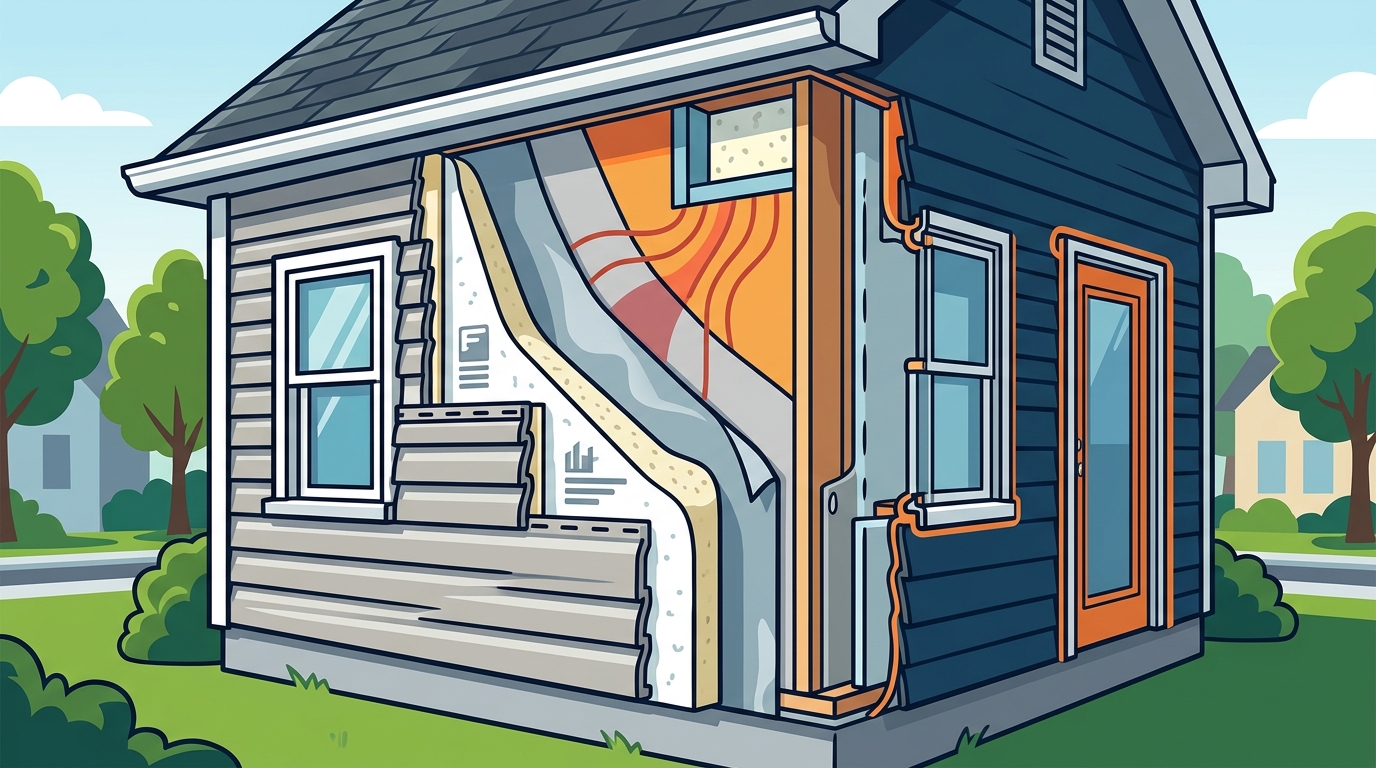
Thermal bridging is the process where heat transfers through a building component that has a higher thermal conductivity than the surrounding insulation. In traditional siding installations, the studs of the wall frame act as thermal bridges because wood conducts heat faster than the insulation between the studs. This creates cold spots on the exterior wall that can lead to condensation and increased energy loss. Insulated siding helps mitigate this issue by providing a continuous layer of insulation over the entire wall surface, including the studs. For additional details, review the New Jersey Local Home.
The Role of Continuous Insulation
Continuous insulation is a layer of insulating material that covers the entire exterior of the building envelope without gaps. When installed behind insulated siding, this layer breaks the thermal path through the studs. This technique is particularly effective in New Jersey homes where the climate requires significant heating for a large portion of the year. By reducing thermal bridging, the interior wall surface temperature remains more consistent, which improves comfort and reduces the risk of mold growth.
Stud Spacing and Insulation Depth
The effectiveness of thermal bridging reduction depends on the depth of the insulation relative to the stud depth. If the insulation is thinner than the studs, some thermal bridging will still occur. Homeowners should ensure that the insulation depth matches or exceeds the stud depth for optimal performance. This consideration is crucial when planning a siding replacement, as it may require adjusting the thickness of the siding profile to accommodate the additional insulation layer.
Air Sealing Gaps
Air sealing is the process of closing gaps and cracks in the building envelope to prevent uncontrolled air leakage. Even with high-quality insulated siding, air can leak through gaps around windows, doors, and penetrations in the wall. This air leakage can account for 25% to 40% of a home's energy loss. Proper air sealing ensures that the insulation performs as intended by preventing air from bypassing the insulation layer. It also improves indoor air quality by reducing the entry of outdoor pollutants and allergens.
Common Leakage Points
Pressure Testing
A blower door test is a diagnostic tool that measures the airtightness of a building envelope. This test can identify specific areas of air leakage that are not visible to the naked eye. Homeowners considering a siding replacement should request a blower door test before and after the project to verify the improvement in airtightness. This data provides a clear measure of the energy efficiency gains achieved through the renovation. It also helps identify any remaining gaps that need to be addressed.
Moisture Barriers
A moisture barrier is a layer of material installed within the wall assembly to prevent water vapor from entering the insulation and structural components. In New Jersey's humid climate, moisture management is critical to prevent mold, rot, and structural damage. A properly installed moisture barrier works in conjunction with the insulation and siding to create a durable and energy-efficient wall system. It allows the wall to dry out when necessary while preventing liquid water intrusion.
House Wrap and Vapor Retarders
House wrap is a water-resistive barrier installed over the sheathing and under the siding. It prevents liquid water from entering the wall while allowing water vapor to escape. Vapor retarders are materials that limit the movement of water vapor through the wall. The choice between these two depends on the climate zone and the type of insulation used. In New Jersey, a balanced approach that allows the wall to dry in both directions is often recommended. This prevents moisture from getting trapped inside the wall cavity.
Importance of Proper Installation
Key Takeaways
- Insulated siding increases the R-value of the wall assembly, reducing heat loss and energy costs.
- Thermal bridging reduction is achieved by adding continuous insulation over the studs.
- Air sealing gaps around windows and doors prevents uncontrolled air leakage and improves comfort.
- Moisture barriers protect the wall structure from water damage and maintain insulation performance.
- The combination of these four elements creates a high-performance building envelope.
- Homeowners should consider the local climate and existing wall structure when selecting materials.
- Professional installation is critical to ensure that all components work together effectively.
- Regular maintenance and inspection can help preserve the energy efficiency of the siding system.
Frequently Asked Questions
What is the best type of insulated siding for New Jersey?
For New Jersey, insulated siding with an XPS or polyiso backing is often recommended due to its moisture resistance and high R-value. This type of siding performs well in the region's humid climate and provides excellent thermal performance.
How much can insulated siding reduce energy costs?
Insulated siding can reduce energy costs by 10% to 20%, depending on the existing wall structure and the quality of the installation. The exact savings will vary based on the home's size, age, and local utility rates.
Do I need to replace my existing insulation when installing insulated siding?
Not necessarily. Insulated siding can be installed over existing insulation, but it is important to ensure that the total R-value meets your goals. A professional assessment can determine if additional insulation is needed within the wall cavity.
What is the role of a moisture barrier in insulated siding?
A moisture barrier prevents water from entering the wall assembly while allowing vapor to escape. This protects the insulation and structural components from moisture damage, which can compromise energy efficiency.
How long does insulated siding last?
Insulated siding typically lasts 20 to 30 years, depending on the material and local weather conditions. Regular maintenance and inspection can help extend its lifespan and maintain its performance.
Is insulated siding worth the investment?
For many homeowners, insulated siding is a worthwhile investment due to the long-term energy savings and improved comfort. The initial cost is higher, but the payback period is often reasonable, especially in colder climates like New Jersey.
Conclusion
Improving energy efficiency with new siding requires a holistic approach that addresses insulation, thermal bridging, air sealing, and moisture management. By understanding these four key elements, homeowners can make informed decisions that lead to a more comfortable and efficient home. American Home Remodeling is committed to helping New Jersey homeowners achieve their renovation goals with high-quality craftsmanship and expert guidance. To discuss your project and explore the best siding options for your home, today.