
The True Cost of State Licensing
Insurance as a Safety Net
General liability insurance is a policy that covers third-party claims for bodily injury or property damage. When a contractor works in your home, the risk of accidental damage is present. A licensed contractor carries this insurance to protect you from financial loss if a worker breaks a fixture or damages your flooring. If an unlicensed worker causes damage, you are personally liable for the repairs. This is a hidden cost that often exceeds the initial savings of hiring an unlicensed provider.
Workers' compensation insurance is a mandatory coverage that pays for medical expenses and lost wages if an employee is injured on the job. This is a significant expense for any remodeling company. If a worker is injured while working for an unlicensed contractor, the homeowner may be held legally responsible for those medical bills. By hiring a fully insured team, you transfer this risk to the contractor's insurance provider. This is a critical financial safeguard that should be a priority when evaluating bids.
Accountability and Legal Recourse
Quality Materials and Workmanship
Professional workmanship is the application of skilled labor using high-quality materials and industry best practices. Licensed contractors often have established relationships with suppliers, allowing them to source premium materials at competitive prices. They also employ skilled tradespeople who are trained in current building codes and techniques. This expertise ensures that the work is not only aesthetically pleasing but also structurally sound and durable. Unlicensed workers may cut corners on materials or techniques to keep costs low, which can lead to premature failure and higher long-term costs.
For example, a professional roofing contractor will use underlayment, flashing, and ventilation systems that meet or exceed code requirements. An unlicensed worker might skip these critical components, leading to moisture intrusion and structural damage. The initial savings on an unlicensed project are often offset by the cost of repairs and replacements down the line. Investing in a licensed professional ensures that your home is built to last, protecting your property value and your peace of mind.
Key Takeaways
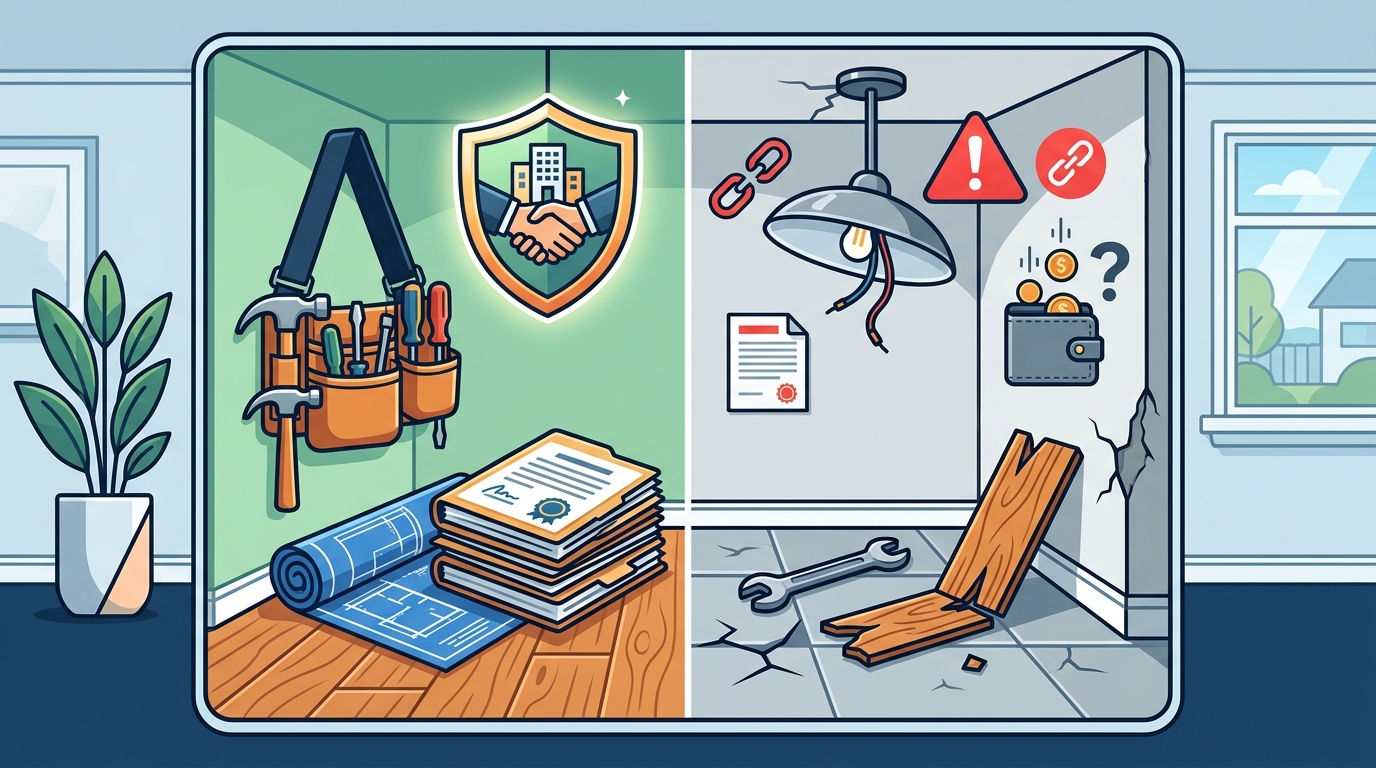
- Licensing fees and compliance costs are built into professional quotes.
- General liability insurance protects you from accidental property damage.
- Workers' compensation insurance shields you from liability for worker injuries.
- Licensed contractors are legally required to provide written warranties.
- Choosing a licensed and insured contractor ensures accountability and long-term value.
Frequently Asked Questions
What is the difference between a licensed and unlicensed contractor?
A licensed contractor has met state requirements for registration, insurance, and financial responsibility. An unlicensed contractor has not met these requirements and operates without state oversight or consumer protection.
Do I need to check a contractor's insurance certificate?
Yes, you should always request a certificate of insurance that lists you as an additional insured. This ensures that the contractor's policy covers your property during the project.
How much more does a licensed contractor cost?
The cost difference varies by project, but licensed contractors typically charge a premium over unlicensed workers. This premium covers licensing, insurance, and compliance costs.
What happens if an unlicensed contractor causes damage?
You are personally liable for the repairs. Since unlicensed contractors do not carry liability insurance, you must pay out of pocket to fix any damage they cause to your home.
Is it illegal to hire an unlicensed contractor in New Jersey?
It is not illegal for a homeowner to hire an unlicensed contractor, but it is illegal for the contractor to perform work without a license. However, you lose legal protections and recourse if you hire an unlicensed worker.
How can I verify a contractor's license in New Jersey?
You can verify a contractor's license through the New Jersey Department of Labor and Workforce Development website. This database allows you to check the status of any registered home improvement contractor. Learn more: Contact Us American Home.