
Before replacing old house siding, you must inspect the underlying structure, evaluate insulation, and test for hazardous materials. These three checks determine your true project cost and safety requirements. This guide details the specific inspection steps, material options, and regulatory considerations for New Jersey homeowners.
Underlying Structural Damage
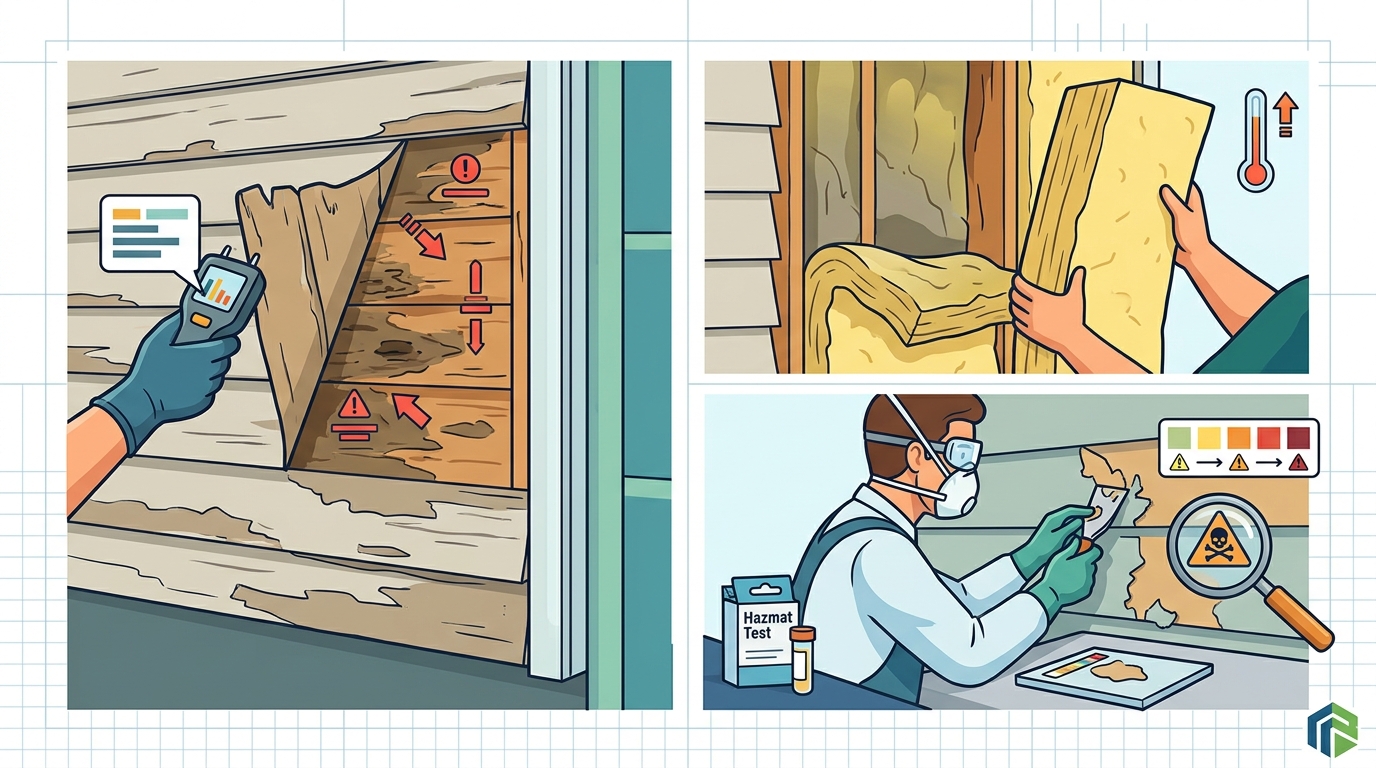
Structural damage is the most critical factor in a siding replacement project. Siding acts as the first line of defense against weather, but it also hides the condition of the wall sheathing and framing. When old siding is removed, contractors must inspect the wood sheathing for rot, soft spots, and moisture intrusion. If the sheathing is compromised, it must be replaced before new siding can be installed. This step ensures the structural integrity of the home and prevents future water damage.
Identifying Rot and Moisture
Contractors use moisture meters to detect hidden water damage in the wood. Dark staining, soft wood, or a musty odor are clear indicators of rot. In New Jersey, where humidity and seasonal temperature swings are significant, moisture management is essential. American Home Remodeling performs thorough structural inspections to identify these issues before they escalate into costly repairs.
Sheathing Replacement
Replacing damaged sheathing involves removing the affected sections and installing new, moisture-resistant panels. This process requires precision to ensure a flat, stable surface for the new siding. Proper sheathing also improves the overall energy efficiency of the home by creating a continuous barrier against air and water infiltration.
Insulation Assessment
Insulation assessment is a key step in determining the energy efficiency of your home. When siding is removed, the existing insulation is exposed, allowing for a detailed evaluation of its condition and performance. Old insulation may be compressed, wet, or degraded, reducing its R-value and increasing energy costs. Assessing the insulation helps homeowners decide whether to add new insulation during the siding replacement process.
Evaluating Existing Insulation
Contractors check for gaps, compression, and moisture damage in the existing insulation. Fiberglass batts, for example, can lose their insulating properties if they become wet or compressed. Blown-in insulation may settle over time, creating cold spots. Identifying these issues allows for targeted repairs or full replacement.
Adding New Insulation
Hazardous Materials Testing
Hazardous materials testing is a mandatory step for homes built before 1978. These older homes may contain lead-based paint, which poses serious health risks if disturbed. Testing for lead and other hazardous materials ensures that the siding replacement process is safe for both the workers and the occupants of the home. Proper testing and abatement are required by federal and state regulations.
Lead-Based Paint Testing
Lead-based paint is a common hazard in older homes. Testing involves collecting samples from the siding and other painted surfaces and analyzing them in a laboratory. If lead is detected, a certified abatement contractor must remove it before the siding can be replaced. This process requires specialized equipment and safety protocols to prevent the spread of lead dust.
Other Hazardous Materials
In addition to lead, older homes may contain asbestos in siding or other building materials. Asbestos is a known carcinogen and must be handled by licensed professionals. Testing for asbestos and other hazardous materials ensures that all safety regulations are followed during the siding replacement process.
Siding Material Selection
Siding material selection is a critical decision that affects the appearance, durability, and maintenance requirements of your home. New Jersey homeowners have a wide range of options, from traditional wood to modern synthetic materials. Each material has its own advantages and disadvantages, and the right choice depends on your budget, aesthetic preferences, and long-term maintenance goals.
Common Siding Materials
Comparing Siding Options
| Material | Cost | Maintenance | Durability |
|---|---|---|---|
| Vinyl | Low | Low | Medium |
| Fiber Cement | High | Medium | High |
| Wood | Medium | High | Medium |
Choosing the right siding material requires careful consideration of these factors. American Home Remodeling offers a range of siding options to suit different budgets and preferences, ensuring that homeowners can find the perfect fit for their homes.
Hazardous Materials Assessment
Hazardous materials assessment is a comprehensive process that goes beyond initial testing. It involves evaluating the entire home for potential hazards and developing a plan to address them safely. This assessment ensures that all hazardous materials are properly managed during the siding replacement process, protecting the health and safety of everyone involved.
Developing an Abatement Plan
Post-Abatement Verification
After the hazardous materials are removed, a post-abatement verification is required to ensure that the area is safe. This involves testing for residual lead or asbestos and confirming that all safety protocols were followed. Post-abatement verification provides peace of mind and ensures that the home is safe for occupancy.
Key Takeaways
- Inspect the underlying structure for rot and moisture damage before replacing siding.
- Evaluate the condition of existing insulation to determine if new insulation is needed.
- Test for lead-based paint and asbestos in homes built before 1978.
- Choose a siding material that balances cost, maintenance, and durability.
- Develop a comprehensive abatement plan if hazardous materials are found.
- Perform post-abatement verification to ensure the home is safe.
- Work with a reputable contractor like American Home Remodeling to ensure a safe and successful project.
Frequently Asked Questions
What is the first thing to check when replacing siding?
The first thing to check is the underlying structure for rot and moisture damage. This ensures the structural integrity of the home before new siding is installed.
Do I need to test for lead if my home was built before 1978?
Yes, homes built before 1978 may contain lead-based paint, and testing is required by federal regulations.
What is the best siding material for New Jersey?
How much does it cost to replace siding in New Jersey?
The cost of siding replacement varies based on the material, size of the home, and any additional work required. A professional contractor can provide a detailed estimate.
Can I replace siding without removing the old siding?
In some cases, new siding can be installed over old siding, but this is not always recommended. A professional inspection is necessary to determine if this is a viable option.
How long does a siding replacement project take?
The duration of a siding replacement project depends on the size of the home and any additional work required. Most projects take between one and two weeks to complete.
Conclusion
Replacing old house siding is a significant investment that requires careful planning and execution. By inspecting the underlying structure, evaluating insulation, and testing for hazardous materials, you can ensure a safe and successful project. Choosing the right siding material and working with a reputable contractor like American Home Remodeling will help you achieve the best results for your home. For more information on roofing and siding services, or to explore remodeling options, visit our website today. We are committed to providing high-quality craftsmanship and affordable pricing for New Jersey homeowners. Learn more: Contact Us American Home.